
“A thorough review of everything concerning M&A.”
Alleima, the global specialist steel company with head quarter in Sandviken, focuses primarily on organic growth, but is always on the lookout for acquisitions, too. In the fall of 2025, Mikael Blazquez (EVP and Head of Strategy, M&A & IT) and Tom Eriksson (EVP and Head of Strategic Research) completed the executive program “Growth Through Mergers and Acquisitions (M&A)” at the Stockholm School of Economics Executive Education
What motivated you to participate in this program?
Tom Eriksson (TE): I’m becoming more involved in the corporate acquisitions side of things, since one of my duties involves reviewing new technologies outside our core business area. I didn’t really have the background I needed in this area, so I was looking for complementary, specialist training and know-how in the field, not least when it comes to the financial aspects and the correct way to value companies.
Mikael Blazquez (MB): My work means I’m involved in M&A cases on a more ongoing basis, and although we do have a clear M&A operating process, I was, to some extent, in a similar position. I’d never done an M&A course that looked at the bigger picture, and the chance for a thorough review of everything concerning M&A in one go was attractive.
You were three employees from Alleima participating in the program at the same time. Was that beneficial?
MB: Yes, absolutely. It’s helped build a consensus amongst us and given us a shared language when it comes to M&As. Everyone comes to the program with their own specific background, experience, and definitions, so having the chance to develop together like this is great.
TE: The fact that several of us had done the same program made it easier to sort out the applicability to our specific cases. It gave us a shared basis for discussing both previous and ongoing processes and to reflect on how to apply what we had learned in practice.
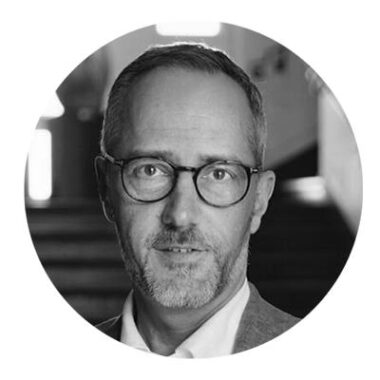
Tom Eriksson
EVP and Head of Strategic Research
“ONE OF THE KEY THINGS FOR ME WAS THE ABILITY TO CRITICALLY REVIEW WHAT OTHER PEOPLE HAVE DONE. SO, WHEN I’M HANDED A REPORT NOWADAYS, I’M BETTER AT CHECKING WHETHER THE CONCLUSIONS ARE ACTUALLY CORRECT.”
What are your more general thoughts on the program?
MB: I liked the combination of onsite training at Campus Kämpasten and independent online studies. It’s an approach that allows you to cover a lot of grounds, without taking extended periods of time off work. The agenda and the content were good, and I appreciated the fact that the training went through the entire M&A process, step by step, from start to finish. I was a little surprised by just how deeply we went into the financial side of things, but I do realize that these issues are critical in building a comprehensive picture of a potential M&A throughout the process.
TE: I was very happy with the program, all in all. The issues raised were relevant and the in-depth financial aspect was complemented with some “softer” issues, such as negotiating and exercises. The exercises during the financial section also gave me an insight into just how complicated it can be. I also appreciated the independent study element, which included really good, tricky questions that definitely made you think. The program’s tempo was very good too, with no weak sections.
What are some of the important lessons you learned?
TE: I’m not one to sit there making my own super-detailed calculations when it comes to valuations, so one of the key things for me was the ability to critically review what other people have done. So, when I’m handed a report nowadays, I’m better at checking whether the conclusions are actually correct. And I had the chance to use what I’d learned in a real-world valuation case immediately after I’d finished the program.
MB: Well, making financial calculations to value a company requires specialist skills that only a few members of the team actually have, but the course has made it easier for me to keep up during in-depth discussions. I have a much better understanding now and can contribute in more forums and on a deeper level.
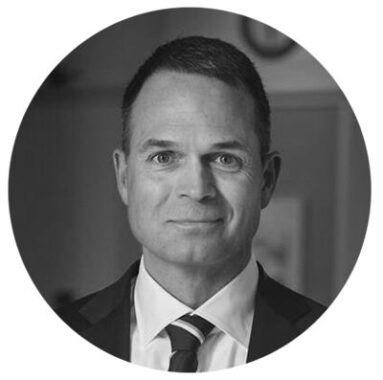
Mikael Blazquez
EVP and Head of Strategy, M&A & IT
“I THOUGHT THE PEDAGOGIC STRUCTURE WAS EMINENTLY THOUGHT OUT AND IT SUITED ME VERY WELL. THE COURSE WAS OF A HIGH STANDARD, WITH REAL ENGAGEMENT AND COMPREHENSIVE EXPERTISE ON THE PART OF THE LEADERS.”
How would you assess the level of the program and the pedagogical approach used?
MB: I thought the pedagogic structure was eminently thought out and it suited me very well. The course was of a high standard, with real engagement and comprehensive expertise on the part of the leaders. You can tell that they’re experienced teachers and that they know what they’re doing. The deep dives into more complicated issues went into the right sort of depth and had the right focus. Learning all of these new things was easy too, because both the tuition and the exercises used recognizable, real world case studies.
TE: Absolutely. The thorough grounding in reality meant the case studies were really revealing, and the Stockholm School of Economics is good at getting the relevant companies to agree to using real-life transactions in the examples. The theoretical element of the course really went into considerable depth, but it also highlighted other aspects of M&As, such as the importance of soft values like culture. The course took you through the entire chain from company valuation, to analysis, negotiation, integration, and legal aspects. The course length was perfect, with everything presented in a condensed manner.
For whom would you recommend this program?
MB: It’s suitable, actually, for anyone in a managerial position who has to deal with M&As and take decisions in that area. It’ll give you a good fundamental understanding of the big picture that you need.
TE: Agreed. The course is suitable both for someone who’s working more specifically in this field and for people who are a little more outside of it but still involved in M&A-related decision-making. And having multiple people from the same organization doing the course together also builds a really useful consensus.