
Inspiration and new perspectives – recommendations for the summer
At SSE Executive Education, we provide organizations and their leaders with new knowledge, research, innovative ways of thinking, and new tools that enable them to successfully drive their organization into the future. For the summer, we would like to share our recommendations for books, podcasts, and other resources that challenge thoughts, habits, and perspectives in a time of change. We wish you a lovely summer!
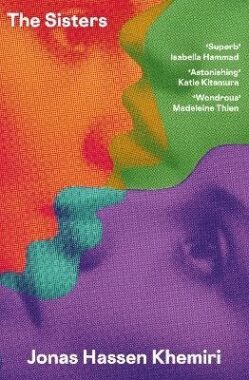
THE SISTERS
Recommended by: Ema Demir, Affiliated Researcher, SSE Institute for Research
Author: Jonas Hassen Khemiri
“Leading one of the Literary Agenda groups over the last two years has been a real delight. The book club is not only an excellent opportunity for me to  read titles I might not otherwise have come across, but also an unusually fine discussion forum. The books’ characters and their fates, the themes, and the structures offer a unique way for us to get to know one another, and our discussions often lead us straight to the heart of the big questions in life. Literary Agenda also offers a welcome break from my otherwise hectic schedule and a recurring opportunity for contemplation and community, and it’s something I always really look forward to.
One book that isn’t actually included in this year’s agenda but which I’d like to warmly recommend as summer reading is The Sisters by Jonas Hassen Khemiri, which is a moving and gripping novel about several parallel childhoods in 1990s Stockholm. The book interweaves the lives and fates of two families into a story that is not only vibrant and captivating, but also immensely moving. And despite its doorstop nature, it’s a novel that is very hard to put down. What’s particularly impressive is Khemiri’s feel for relationships within a family and the special dynamic that develops between siblings: loyalty, competition, closeness, distance, and all the things that often remain unsaid. The Sisters is a rich, warm novel that stays with you long after you’ve turned the final page.”
THE LAST HUMAN JOB: CONNECTING IN A DISCONNECTED WORLD
Author: Allison Pugh
Recommended by: Jenny Lantz, Affiliated Researcher, SSE Institute for Research

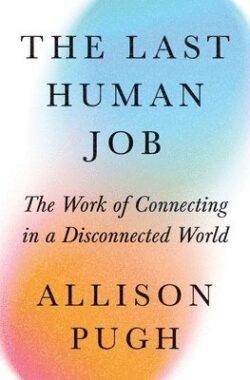
“The Last Human Job: Connecting in a Disconnected World is an extremely timely book by Allison Pugh, Professor of Sociology at John Hopkins University. Pugh warns of the “social bleeding” that occurs when AI-obsessed engineers try to automate human interactions in sectors such as health care, education, therapy, leadership, sales and the law. The preoccupation with efficiency, speed, and profit means workplaces lose their role as social meeting places. She also notes that many of these jobs are currently relational in nature. Pugh coins the concept of “connective labor” which refers, briefly speaking, to seeing the other person, reflecting the other person, and making the other person feel seen. The Last Human Job focuses extensively on the value of connective labor and on the consequences when it becomes a rare commodity. Eliminating the human element doesn’t mean that everything else carries on working just as it always did. Pugh says that what is on the line here is the social intimacy, the resonance between people who may actually be quite different. It is, in other words, about our social health.
This is unmissable reading for managers and leaders implementing AI into different processes and who have identified a need to redefine roles.
This podcast is also a good place to start: https://press.princeton.edu/ideas/ideas-podcast-the-last-human-job.“
Recommended by: Emilia Cederberg, Assistant Professor, Department of Accounting and faculty in our programme Manager and Leader.

“My aim of my book tips for the summer is to inspire you to dive into the sort of reading matter that challenges us to reflect on contemporary society and the things we tend to take for granted. The tips range all the way from fiction (Ismaïl) to non-fiction (Graeber/Wengrow) via a sort of hybrid (Ypi), but the authors all share an interest in our economic system and in how we choose to organize ourselves, whether in families, hierarchies, or countries.”
 HYPER
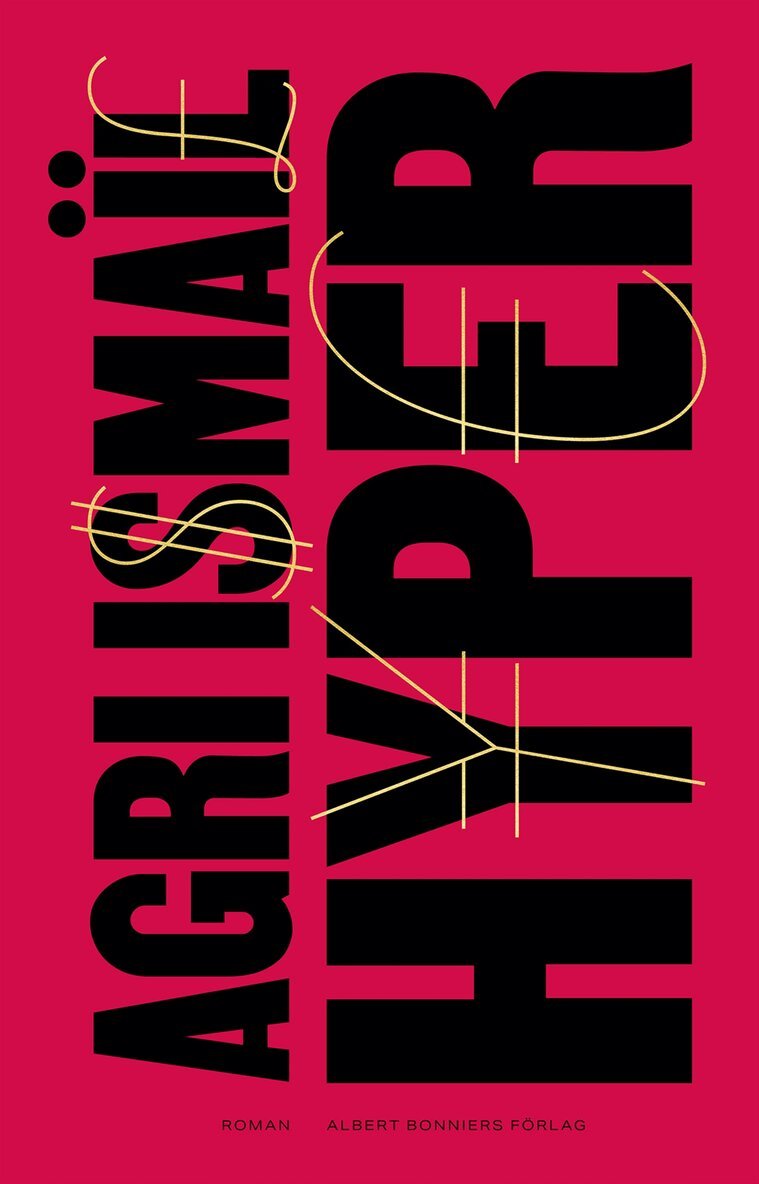
HYPER
Author: Agri Ismaïl
“Agri Ismaïl’s widely lauded Hyper is a kind of in-person study of capitalism, post 2008, through a portrait of a Kurdish family in diaspora. Ismaïl uses an exposé of life in Iraq, London, Dubai, and New York to invite us, his readers, to ask uncomfortable questions about ourselves: about our relationships to prestige, money, and success. Agri Ismaïl is clearly, to some extent, applying a researcher’s methodology and focusing an almost anthropological gaze on contemporary society – whether it is revealed in the glass stands of a Hermès store or in the characters on a computer screen. Agri Ismaïl has worked as a corporate lawyer in London, so his description of the world of finance has an insider’s perspective. The book was part of the Stockholm School of Economics’ Literary Agenda book circle reading list for students and lecturers alike for the 2025/2026 academic year – the year when Agri Ismail also visited us for an extremely interesting and thought-provoking “in conversation with the author” event.”

FREE
Author: Lea Ypi
“Lea Ypi’s Free paints an autobiographical portrait of her childhood in a disintegrating communist Albania, of living in an authoritarian regime – and of what came afterwards. The book allows us to follow an extreme ideological regime shift at an individual level. Ypi is a Professor of Politics and Philosophy at the London School of Economics, and her reflections, as a researcher, on the concept of freedom is a constant theme throughout the book.”
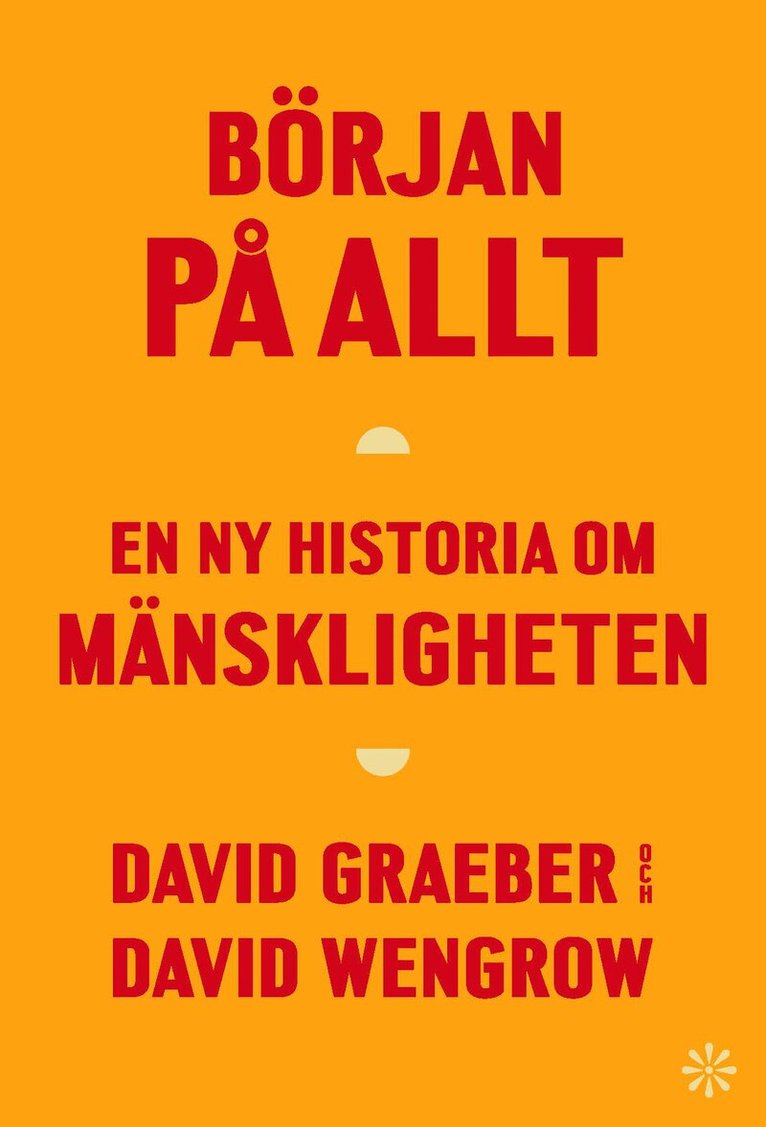
THE DAWN OF EVERYTHING
Author: David Graeber och David Wengrow
“If you’re looking for something really meaty to get your teeth into during your free time this summer, I’d also like to recommend The Dawn of Everything by David Graeber and David Wengrow. Graeber died before the book could be published, but his friend and close colleague completed their work, and the book was published posthumously. Their book can usefully be read as an adjunct to “Humankind” by Rutger Bregman, which my colleague, Frida Pemer, recommended for the summer of 2025. The books do, to some extent, start with the same issue, namely the tension between Rosseau’s and Hobbes’ fundamentally different views of human nature. Are we, at heart, egotistical and our drives are hence only held in check by civilization, or is it actually civilization, through the shift to agriculture and ownership, which is the root of inequality, whilst we, in our original “natural state” were peaceful and good? But where Bregman ultimately takes Rousseau’s side, Graeber and Wengrow argue rather that the entire distinction is based on a false premise: on a writing of history that has seen mankind move from one fixed stage to another. As an archeologist and anthropologist, respectively, they assert that we now have proof that we have organized our societies and economies in a wide variety of different ways over the millennia. This is the journey on which they take the reader.
Graeber and Wengrow inspire us to think both more deeply and more broadly about mankind’s ability to organize their society. For those of us who work with change processes in connection with sustainability issues, for example, on a daily basis, this book serves as a reminder that the extant systems are not necessarily following an historic path that is both logical and given by nature. Quite the reverse: we humans are creative and reflective and have always taken conscious decisions on the consequences of different ways of organizing our societies. A hopeful message in an anxious time.
For those who think 700 pages is a bit too hefty as summer reading, there are a number of podcasts on the theme, such as this one with Sverker Sörlin, or this one.“
THE WORLD NEEDS GREAT LEADERS. BE ONE!
We offer a wide range of educational programs. Find the right education for you >>
